Nigeria - Health
Nigeria's health care delivery system consists of a network of primary, secondary, and tertiary facilities. As of 1992, primary care was largely provided through approximately 4,000 health clinics and dispensaries scattered throughout the country. As for secondary care, there were about 700 health care centers and 1,670 maternity centers; tertiary care was handled through 12 university teaching hospitals with about 6,500 beds. As of 1999, there were an estimated 0.2 physicians and 1.7 hospital beds per 1,000 people. The target areas for mass procurement of medical equipment are the teaching hospitals. The lack of proper facilities and inadequate remuneration of public sector health care workers have also spurred the development of a limited number of privately-owned hospitals which cater to those who can afford them. The country is in need of medical supplies and equipment. Some pharmaceuticals are manufactured in Nigeria. In 2000, 57% of the population had access to safe drinking water and 63% had adequate sanitation. As of 1999, total health care expenditure was estimated at 2.8% of GDP.
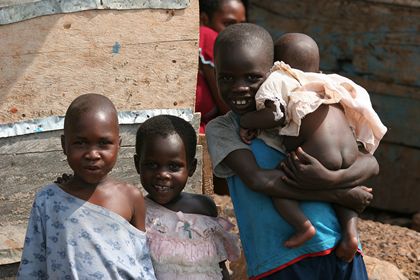
Despite the receding influence of such endemic diseases as yellow fever, health problems in Nigeria remain acute. Malaria and tuberculosis are the diseases of most frequent incidence, but serious outbreaks of cerebrospinal meningitis still occur in the north. Just under half of all deaths are thought to be among children, who are especially vulnerable to malaria and account for 75% of registered malaria deaths. The prevalence of child malnutrition for children under age five as of 1999 was 46%. Goiter was present in 20% of all school-age children in 1996. Nigeria had the highest number of measles cases reported in 1995 of all African nations (95,915 cases and 12,393 deaths). In 1995, diarrheal diseases claimed 204,400 lives. As of 2000, almost 15% of all Nigerian children did not live to their fifth birthday. Malaria and diarrheal diseases accounted for, respectively, 30% and 20% of childhood mortality. Immunization rates for 1997 for children up to one year old were as follows: tuberculosis, 53%; diphtheria, pertussis, and tetanus, 45%; polio, 45%; and measles, 69%. Only 1% of children were immunized for yellow fever in 1993.
Schistosomiasis, guinea worm (19,766 cases in 1995), trachoma, river blindness, and yaws are other diseases of high frequency. Progress has been made in the treatment of sleeping sickness (trypanosomiasis) and leprosy. The former has been nearly eliminated by the introduction of new drugs, while the introduction of sulfone therapy has nearly halted the incidence of new cases of leprosy in the eastern states. A program for the eradication of river blindness and malaria has been undertaken in cooperation with The World Health Organization. The government is also working on the control of sexually transmitted diseases, including HIV/AIDS, through public education and behavior change.
HIV/AIDS has reached epidemic levels in Nigeria. At the end of 2001, the number of people living with HIV/AIDS was estimated at 3.5 million (including 5.8% of the adult population) and deaths from AIDS that year were estimated at 170,000. HIV prevalence in 1999 was 5.1 per 100 adults.
Only 15% of married women used contraceptives in 2000. The fertility rate in 2000 was 5.3 children per woman surviving her childbearing years. The life expectancy for the Nigerian was only 47 years in 2000. As of 2002, the crude birth rate and overall mortality rate were estimated at, respectively, 39.2 and 14.1 per 1,000 people.
Tobacco consumption has decreased from 0.5 kg (1.1 lbs) in 1984–86 to 0.4 kg (0.9 lb) a year per adult in 1995.