Fiji - Agriculture
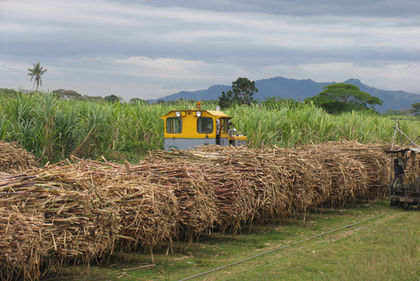
Agriculture continues to be the bedrock of the Fijian economy, accounting in 1999 for some 16 percent of its GDP and two-thirds of its 310,000-strong workforce. Sugar, the most important agricultural product, generated almost 30 percent of Fiji's agricultural GDP in 1998, and 15 percent (through sugar processing) of its manufacturing GDP. The 364,000 tons of sugar that Fiji produced that year earned the country some US$122.9 million. The commercial future of this industry depends on the resolution of the property system that has been in place since 1909, when the British colonial government froze land-ownership titles in an attempt to protect indigenous (Fijian) property owners. As a result, only 8 percent of a total of 607,982 acres (1,519,956 hectares) is freehold (privately-owned); the remainder is either tribal-(83 percent) or government-owned (8 percent) land. As of 1993, only 9.9 percent of that total acreage was arable, with most of it in tribal hands or leased to Fijian Indian farmers, who produce 90 percent of Fiji's sugar-cane. As these leases expire and the land is returned to indigenous growers, major disruptions in sugar-cane production can be expected.
With 64.9 percent of Fiji's land area being forest and woodland, timber is also economically important, especially pine and mahogany. Attempts since the mid-1980s to bolster the industry, and offset Fiji's dependence on sugar, have encouraged significant strides in timber production. In 1999 timber provided US$27.6 million in export revenue, a 45 percent increase over 1994 levels.
The fishing industry, especially tuna harvesting, also shows significant promise. Fiji controls a 200-nautical mile (370.4-kilometer) economic exclusion zone around its shoreline. In 1998 fishing brought Fiji US$24.9 million in overseas earnings, and tuna is Fiji's fourth largest export earner.
Fiji also exports copra (dried coconut meat), ginger, and coconut oil, as well as bananas, rice (a product for which Fiji is aiming at self-sufficiency), cereals and vegetables, pineapples and other tropical fruit. Copra, in particular, has benefitted from the removal in 1998 of the ban on its export; since the licensing of a second copra-buying company, prices for producers have increased considerably. The discovery of kava's (a shrubby pepper) medicinal qualities and its potential as a pharmaceutical ingredient have also fueled the growth of a small but promising export industry.
i thought i thought sugar is fourth export eaner...
Their is a need of assistance by the government
1. price of cassava/kg
2. price of citrus/kg
3. price of sugarcane/tonne
4. price of maize/kg
5. price of coconut (copra)/kg
6. price of banana/kg
it has helped us fnu studentrs to gather bits of information from this artical.