Sudan - Poverty and wealth
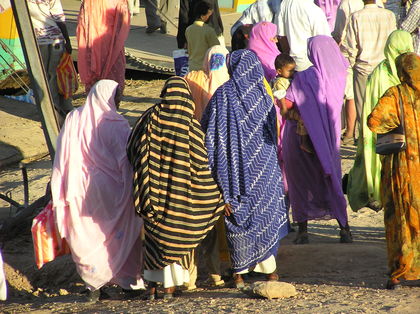
Sudan is one of the poorest countries of the world. Most of the population lives in unbelievably hard conditions. One of the Sahel countries, Sudan is located in the Sahara desert. Hard climate conditions and lack of natural resources were always responsible for the poor life conditions. But the country's political instability and internal conflict has increased the poverty.
| GDP per Capita (US$) | |||||
| Country | 1975 | 1980 | 1985 | 1990 | 1998 |
| Sudan | 237 | 229 | 210 | 198 | 296 |
| United States | 19,364 | 21,529 | 23,200 | 25,363 | 29,683 |
| Egypt | 516 | 731 | 890 | 971 | 1,146 |
| Dem. Rep. of Congo | 392 | 313 | 293 | 247 | 127 |
| SOURCE: United Nations. Human Development Report 2000; Trends in human development and per capita income. | |||||
The southern parts of the country are practically isolated and it is very hard to estimate the level of poverty in those territories, although it is known that many people are dying of hunger or diseases. It is difficult for international aid or health-care organizations to provide care for southern Sudanese because of the civil war.
Most of the population is nourished from subsistence agriculture. Food is so scarce that during droughts lives are endangered. The isolationist policies of the totalitarian regime deprived the country of foreign direct investment, as well. The result was that only sporadic international humanitarian aid reached some of the poorest regions for many years. Historically, the United States has been the most important donor of financial aid to the south.
To escape the difficult conditions, many people have fled the country. The people of relative wealth in Sudan live in Khartoum, Port Sudan, and near the Nile River, where the conditions are a bit better. Only small groups of people loyal to the regime would be considered "rich."
According to the Human Development Report 2000, 26.6 percent of the population is not expected to survive to more than 40 years of age. Comparatively, in Egypt the number is only 9.9 percent and in China 7.7 percent. The early death of so many Sudanese can be traced to the violence but also the lack of basic necessities. About 27 percent of the population do not have access to safe water (in Egypt, 13 percent); 30 percent have no access to health services (in Egypt, 1 percent). For children under the age of 5, 34 percent are underweight (in Egypt, 12 percent). The World Factbook estimated that the GDP per capita at purchasing power parity in 2000 was US$1,000. All of these numbers underscore the difficulty of most people's lives in Sudan.
Love olivia
Sudan north and south was one quarter of the united states( 4.3 m sq) one million sq miles that is endowed with rich natural resources, including natural gas, gold( 250 tons) as of 2018 silver, chromium, asbestos, manganese, gypsum, mica, zinc, iron, lead, uranium, copper, kaolin, cobalt, granite, nickel, tin and aluminum.
sesame ,Arabic gum 80% of world production, 49 million cows 24 million sheep 11 million camel etc. so much natural wealth with good management will surpass Saudi Arabia and almost all middle east countries and African countries.
a vast land and so much water...Two Nile's ...white and blue Nile THEY MEET AT THE CAPITAL TO FORM THE GREAT NILE TO EGYPT. and seven rivers.
by the way North of Sudan and south of Egypt is the real ancient Egypt. the present Cairo was a vacant land at the time.
On December 2019 the Sudanese people after 30 years of Muslim brotherhood rule revolted and now on the process of managing their wealth.
Blessed with plentiful sunshine and rainfall, and access to the fertile plains surrounding the life-giving River Nile and its tributaries, Sudan’s rich soils yield a vast array of crops, such as sorghum, millet and cereal grains, vegetables and fruits, including lemons, mangoes, grapefruits and oranges. The Nile – as well as the Red Sea – is also an abundant source of fish.
In the drier northern region livestock farming is the most prominent activity. With an estimated 130 million heads of different animal species – namely sheep, cows, goats and camels – the country is a major contributor to the global livestock market.
As with crops, the majority of Sudan’s livestock exports are also destined for the Gulf States. In September last year, the Bank of Khartoum, Sudan’s biggest private bank (owned by investors from the Emirates) announced that it planned to launch financing for livestock exports to the Gulf.
“Livestock is very important for food security in the region, in terms of meat, milk, fish, and poultry,” says the Minister of Livestock and Fisheries. “In Sudan we have a free-range system in most of the areas. Our food is organic. We don’t use chemicals, so we have natural food.”