Ethiopia - Foreign trade
Coffee exports generate more than half of Ethiopia's export returns (53%), but the country's coffee production only accounts for 2.2% of the world's coffee exports. Leather, animal hides, and skins also bring in export revenues (9.9%). Other agricultural products, including vegetables, oil seeds, and cotton reflect the remainder of major exports (10%).
Ethiopia is heavily dependent on imported manufactures. Machinery, petroleum, and petroleum products represent the leading import items. In 2000 Ethiopia's imports were distributed among the following categories:
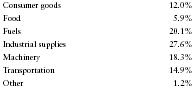
| Consumer goods | 12.0% |
| Food | 5.9% |
| Fuels | 20.1% |
| Industrial supplies | 27.6% |
| Machinery | 18.3% |
| Transportation | 14.9% |
| Other | 1.2% |
Principal trading partners in 2000 (in millions of US dollars) were as follows:
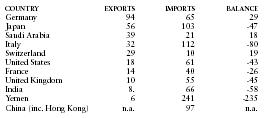
| COUNTRY | EXPORTS | IMPORTS | BALANCE |
| Germany | 94 | 65 | 29 |
| Japan | 56 | 103 | -47 |
| Saudi Arabia | 39 | 21 | 18 |
| Italy | 32 | 112 | -80 |
| Switzerland | 29 | 10 | 19 |
| United States | 18 | 61 | -43 |
| France | 14 | 40 | -26 |
| United Kingdom | 10 | 55 | -45 |
| India | 8. | 66 | -58 |
| Yemen | 6 | 241 | -235 |
| China (inc. Hong Kong) | n.a. | 97 | n.a. |