India - Population.
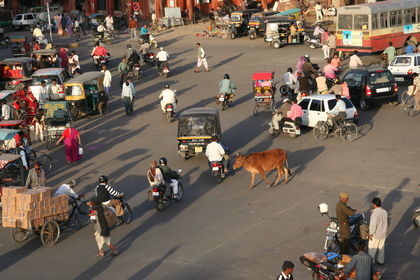
The population of India is estimated to have passed the 1 billion mark in May 2000 (1,014,000,000; July 2000 estimate). For centuries, India has been a land of startling contrasts. Maharajahs and millionaires, snake charmers and poor farmers, beauty queens and burnt brides, and a population explosion juxtaposed with high child and maternal mortality. The billionth citizen of this ancient land entered a country with 40 political parties and 24 official languages, each spoken by at least a million people. A cultural preference for male children (who are thought to bring prosperity to a household) has resulted in a significant gender disparity with 927 females to every 1,000 males. The 2 relatively prosperous northern states of Haryana and Punjab have the largest gender disparities. Only Kerala—the socialist -run state—has a gender balance of 1 to 1. Feticide (the killing of a fetus), infanticide (the killing of an infant) or, later in life, forced suicide are still the lot of some Indian girls and young women. Though India was
i'm thankful to the website
It is a good website
This information helped my English project.
it help to complete my uncompleted topic
I am very thankful to this website...