Dominican Republic - Poverty and wealth
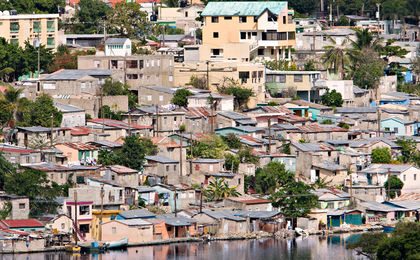
Steady economic growth has brought considerable wealth to some Dominicans, but a considerable sector still lives in extreme hardship, without access to social services or proper educational opportunity. Recent figures are not available, but in 1989 it was estimated that the richest 10 percent of Dominicans accounted for al/tamost
| GDP per Capita (US$) | |||||
| Country | 1975 | 1980 | 1985 | 1990 | 1998 |
| Dominican Republic | 1,179 | 1,325 | 1,325 | 1,366 | 1,799 |
| United States | 19,364 | 21,529 | 23,200 | 25,363 | 29,683 |
| Jamaica | 1,819 | 1,458 | 1,353 | 1,651 | 1,559 |
| Haiti | 500 | 607 | 527 | 481 | 370 |
| SOURCE: United Nations. Human Development Report 2000; Trends in human development and per capita income. | |||||
| Distribution of Income or Consumption by Percentage | |
| Share: Dominican Republic | |
| Lowest 10% | 1.7 |
| Lowest 20% | 4.3 |
| Second 20% | 8.3 |
| Third 20% | 13.1 |
| Fourth 20% | 20.6 |
| Highest 20% | 53.7 |
| Highest 10% | 37.8 |
| Survey year: 1996 | |
| Note: This information refers to income shares by percentiles of the population and is ranked by per capita income. | |
| SOURCE: 2000 World Development Indicators [CD-ROM]. | |
40 percent of national income, while the poorest 10 percent received only 1.6 percent.
While free primary school education is available, many children fail to complete their early education, often because they are required as workers to supplement family income. There is no national system of health care or old-age pensions. The state occasionally attempts to lessen the impact of price rises by subsidizing basic foods such as milk powder or rice and by job-creation schemes in the poorest neighborhoods.
Dominican society is highly stratified, with a very small and very wealthy upper class, a medium-sized middle class, and a very large working class or poor peasant class, many of whom live in absolute poverty. The middle class encompasses professionals such as teachers or hospital workers or those involved in retail, while the poor include agricultural and factory laborers, those working in the informal sector, and the unemployed. There is little upward social mobility, with the exception of musicians or baseball stars who may escape a life of poverty and become millionaires.
The poorest areas of the country are to be found both in Santo Domingo, where shantytowns sprawl around the edges of the city, and in remote rural areas. Perhaps the most impoverished district is in the southwest, near the border with Haiti, where thousands of Haitian migrants and poor Dominican families inhabit rudimentary shacks.
P.S.
Please do not show my email publicly. Thanks.
The Dominican Republic is a middle income country, with a leading tourism industry as well reputable health and banking services for Latin America. Also is a lead exporter of tobacco, sugar, and coffee. That said many of the wealthy people, are business tyccons leading in such industries. They would be counsidered wealthy anywhere in the world.
Because there is free access to universities (UASD), people are fully able to get a FREE college education (if they can get themselves to a major city) and join the already sizable middle class which consists of lawyers, doctors, professors, and entrepreneurs. Being middle class in Dominican Republic means that you have a professional degree, own your house, do not have a mortage or pending loans, have at least one car, kids attend private school, can afford a beach/resort vacation once a year, and can travel abroad at least once every two years. How many Americans would be able to qualify as middle with that criteria? Being a doctor, dentist, or a lawyer does not equal rich, just comfortable.
P.S.Thanks Anya