Zimbabwe - Environment


Among the most serious of Zimbabwe's environmental problems is erosion of its agricultural lands and deforestation. By 1992, deforestation was progressing at the rate of 70,000–100,000 ha per year, or about 1.5% of the nation's forestland. The confinement of large segments of the population to relatively unproductive lands before independence put severe pressure on these lands, a substantial portion of which may have been irreversibly damaged.
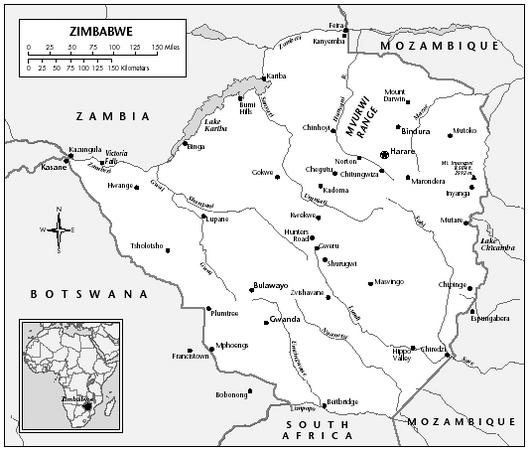
LOCATION: 15°37′ to 22°25′ S; 25°14′ to 33°4′ E. BOUNDARY LENGTHS: Mozambique, 1,231 kilometers (762 miles); South Africa, 225 kilometers (140 miles); Botswana, 813 kilometers (505 miles); Zambia, 797 kilometers (498 miles).
LOCATION: 15°37′ to 22°25′ S ; 25°14′ to 33°4′ E. BOUNDARY LENGTHS: Mozambique, 1,231 kilometers (762 miles); South Africa, 225 kilometers (140 miles); Botswana, 813 kilometers (505 miles); Zambia, 797 kilometers (498 miles).

Zimbabwe's air is polluted by vehicle and industrial emissions, while water pollution results from mining and the use of fertilizers. Zimbabwe's cities produce 0.5 million tons of solid waste per year. The nation has been estimated to have the highest DDT concentrations in the world in its agricultural produce.

In 2001, nine of the nation's mammal species and nine bird species were endangered, as well as 73 types of plants. Zimbabwe has about half of the world's population of black rhinoceroses, an endangered species. Rare or threatened species include the cape vulture, black-cheeked lovebird, and brown hyena. For protection, the government has adopted a policy of shooting poachers on sight.

User Contributions:

yevonne
Report this comment as inappropriate
Feb 16, 2009 @ 4:04 am
Zimbabwes environment is also currently affected by heavy water pollution which has been excaberated by the infestatation of the water hyancith at Chivero for example resulting in contaminated drinking water supplies which has resulted in unsafe water sources
tanya
Report this comment as inappropriate
Apr 14, 2009 @ 4:16 pm
i would like to know how people in zimbabwe adapt to live in this harsh environment.
Tafadzwa
Report this comment as inappropriate
Sep 9, 2009 @ 2:14 pm
I'm baffled by the above negative and pre-medivial questions cum perceptions.
1. Tanya
To answer you in short as u know mammals are warm blooded animals meaning that they can adopt,secondly the situation has been affected by hyperbole,that is exaggeration:technically if the situation is as serious as u potray then the mortality rate should be beyond norm but guess what Zimbabwe is home to +13 million inhabitants:alive of cause.
2.Yvonne
U r correct but most suburbs had no drinking water for the past 2 years or so and had since resorted to wells which ahve since caused chaotic depletion of underground aquifers.

Anyway,I'm glad u guys showed concern but other than waffling we need progressive concern and shan retrogression.

Comment about this article or add new information about this topic:

CAPTCHA


Zimbabwe forum