Sudan - Foreign trade
Sudan relies on agriculture and animal husbandry for its export commodities. The most important exports are oil seeds, especially sesame (22%), cotton (17%), and sheep (12%). Other exports include gold (7.6%), vegetable oil (6.4%), crude vegetable materials (5.3%), and sugar (3.7%). As of 2000 it was expected that the development of oil reserves estimated at over 211 billion barrels might change Sudan's foreign trade situation. In 2000, Sudan imported about $17 million worth of irrigation materials from China.
In 1998 Sudan's imports were distributed among the following categories:
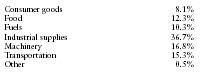
| Consumer goods | 8.1% |
| Food | 12.3% |
| Fuels | 10.3% |
| Industrial supplies | 36.7% |
| Machinery | 16.8% |
| Transportation | 15.3% |
| Other | 0.5% |
Principal trading partners in 1998 (in millions of US dollars) were as follows:
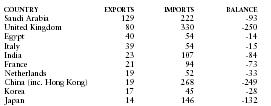
| COUNTRY | EXPORTS | IMPORTS | BALANCE |
| Saudi Arabia | 129 | 222 | -93 |
| United Kingdom | 80 | 330 | -250 |
| Egypt | 40 | 54 | -14 |
| Italy | 39 | 54 | -15 |
| India | 23 | 107 | -84 |
| France | 21 | 94 | -73 |
| Netherlands | 19 | 52 | -33 |
| China (inc. Hong Kong) | 19 | 268 | -249 |
| Korea | 17 | 45 | -28 |
| Japan | 14 | 146 | -132 |
Comment about this article, ask questions, or add new information about this topic: